
Finding St. George Residents
A name-first search and an address-first search produce different evidence. A name can lead to Utah Courts Xchange, voter status, a professional license, a business entity, or a historical telephone listing. An address can lead to a county parcel, a valuation report, a recorded deed, a city permit, and then a period source that names a household. Neither route is a master list of people. The assessor describes property, the recorder describes recorded instruments, and the voter system describes registration when its fields are public.
Keep a small log. Write down the exact spelling, source date, parcel or case number, page number, and the reason a result matches. A common name needs a second fact, such as a court location, age range, address history, or party role. For a family-history question, the best proof may be a chain of sources rather than one record.
- Write the known name, address, old spelling, or approximate year.
- Normalize a street address with USPS, then find the parcel in county or city GIS.
- Use the assessor for a property lead and the recorder for the legal instrument behind it.
- Check Utah voter, court, vital, license, or historical sources only for the question they can answer.
- Ask the custodian through GRAMA, mail, phone, or a public counter when a useful record is not online.
Where St. George Records Live
Most Washington County records offices sit at 111 East Tabernacle in St. George. The Recorder keeps instruments, maps, plats, cross-reference indexes, and copies. The Assessor handles valuation and property reports. The County Clerk handles elections, marriage services, and GRAMA. That shared address does not mean the offices answer the same question. Fifth District Court is at 206 West Tabernacle, Justice Court is at 197 East Tabernacle, and city offices are at 175 East 200 North.
State records add another layer. Utah Office of Vital Records and Statistics controls certificates. Utah Courts Xchange covers public district and justice case data. Utah State Archives preserves older county series. The Washington County Library and Utah Tech provide different historical access points. Call the named custodian before visiting, because public viewing hours and portal behavior can change.
Washington County Recorder
111 E Tabernacle
St. George, UT 84770
(435) 301-7680
Washington County Assessor
111 E Tabernacle
St. George, UT 84770
(435) 301-7020
Washington County Elections
111 E Tabernacle
St. George, UT 84770
(435) 301-7248
Four Clues From a Parcel Search
The Washington County GIS Quick Start guide shows a useful first screen. Choose a search method, continue, and select a parcel from the filtered results. The result can expose a parcel identity and map context, but it does not turn the map into a current occupancy roll. A parcel is the mapped land unit; the name on a result may be an ownership field, and the mailing address may belong to someone elsewhere.
| Field or control | What it contributes |
|---|---|
| Search for a Parcel By | Select Account Number, Parcel ID Number, or Address. |
| Parcel # | Type initial characters, then choose a filtered parcel. |
| Continue / Cancel | Move to the selected method or leave the search. |
| Account Number | Identifies the county account shown in the result. |
| Parcel Number | Connects the mapped unit to property research. |
| Subdivision Name and Ownership | Shows local context and an ownership label, subject to live viewer wording. |
Use the Washington County GIS map inventory for parcel, street, subdivision, city-limit, zoning, flood-zone, and aerial-viewer routes. The county says owner name and mailing address can be a separate Public Extract or Assessment Roll purchase, so basic parcel data should not be mistaken for an owner export.
Owner, Mail Recipient, Voter
Three names can appear around one St. George address. A grantee receives a recorded interest in a deed. An assessor report supports valuation and property research. A voter record ties a person to a registration address when the record is public. A tax mailing recipient may be an owner, lender, trust, or another authorized contact. These roles overlap often, but they are not interchangeable.
For a clean result, retain the label beside the name. Record whether the address is situs, meaning the parcel location, or mailing, meaning where correspondence goes. A deed proves a recorded transfer, not who sleeps at the address. A voter record shows registration, not title. A telephone book shows a subscriber at a point in time. Those roles prevent a directory search from making a claim the source cannot support.
- Roll
- A list maintained for a defined purpose, such as property assessment or voter registration.
- Index
- A finding aid that points to records; it may not include the full image.
- Parcel
- A mapped unit of land identified by a county account or parcel number.
- Criss-cross directory
- A reverse directory arranged by address rather than surname; a verified St. George shelf run was not located.
Search a Public Utah Court Case
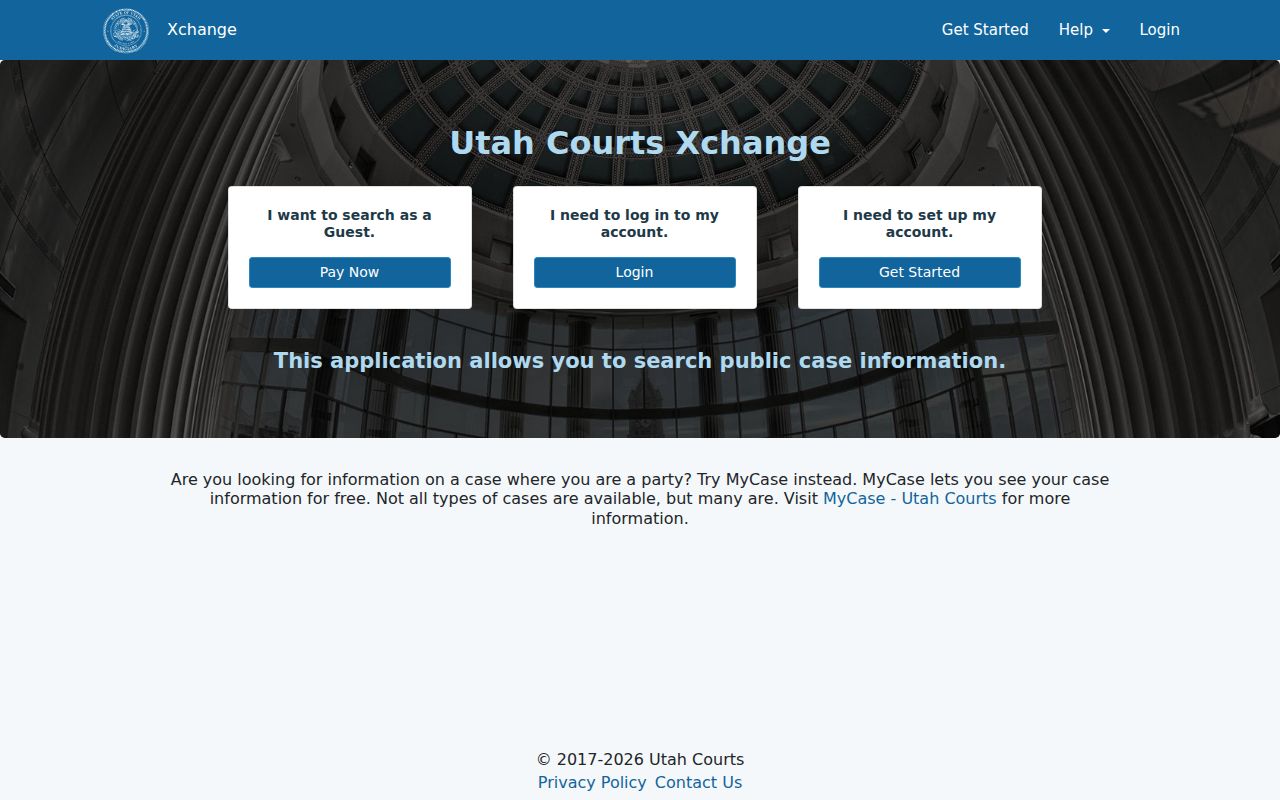
Utah Courts Xchange is the public entry point for district and justice court CORIS data. Select jurisdiction, choose all cases or judgments, and narrow a last name with first name, case type, scope, date range, birth date, citation, or case number when appropriate. The search is billable, and broad results can reach a 500-result cap. A St. George question usually benefits from selecting Washington County or Fifth District Court before searching a common name.
| Search control | Use | Result context |
|---|---|---|
| Jurisdiction | District, Justice, or available combinations | Separates Fifth District from justice data |
| Last / First Name | Party or company name | Party code and role help compare names |
| Case type and scope | Civil, criminal, traffic, county, court | Reduces a broad result set |
| Case number or citation | Exact identifier when known | Anchors the search to one matter |
| Case History / Documents | Open the public detail | May show disposition, proceedings, or a billable PDF |
Results can show county, court, case type, filing date, party names, party code, and sometimes a criminal defendant’s birth date. Sealed adoption, juvenile, expunged, and other protected categories are excluded. An empty result is not proof that no matter exists. The local clerk, public courthouse terminal, or a specific court-record request can be the next step.
Vital Records Have Waiting Periods
Utah Code §26B-8-110 gives public waiting periods for vital records: birth records after 100 years, death records after 50 years, and other vital records after 75 years. Current certified birth and death copies require a direct, tangible, and legitimate interest under §26B-8-125(3), along with the required identity and relationship basis. The waiting rule does not erase medical or protected information.
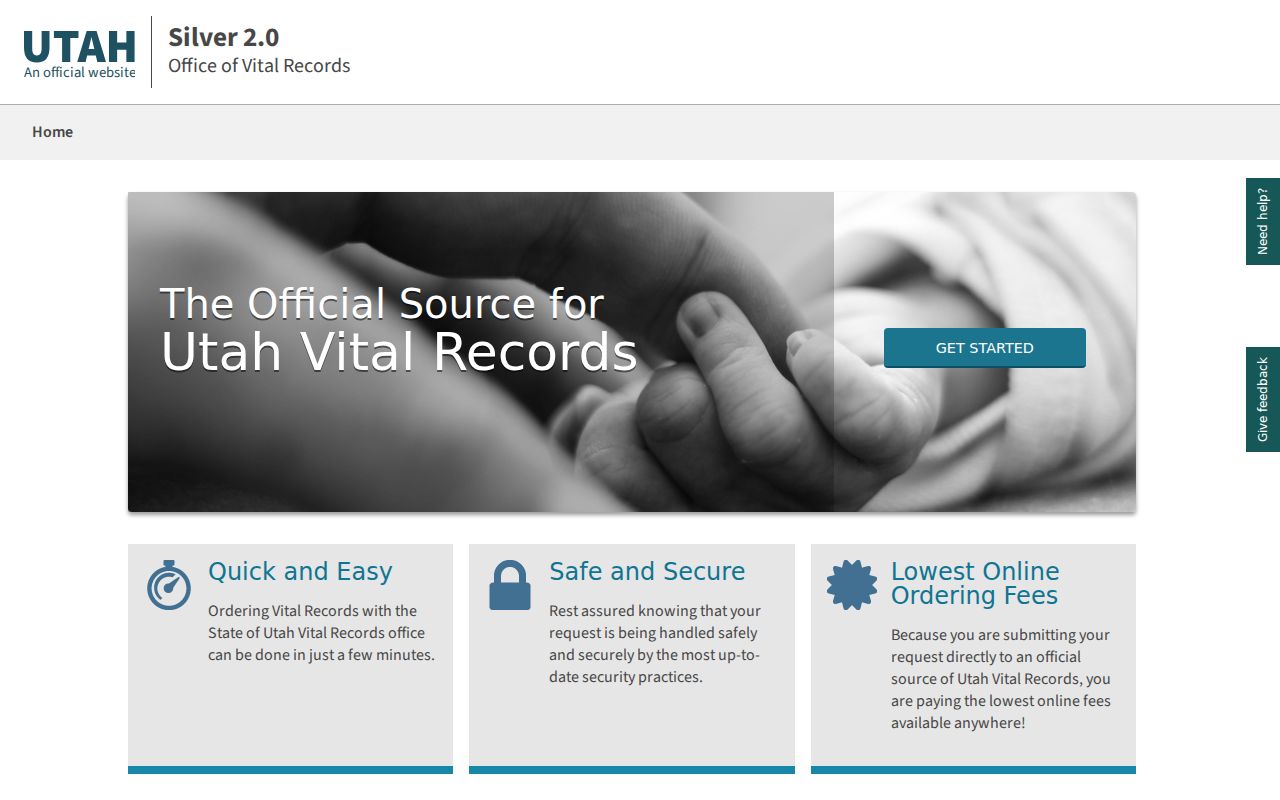
The state order portal is the official route. The Washington County office of Southwest Utah Public Health Department at 620 South 400 East can provide a local access point for Utah records. Marriage and divorce certificate instructions list relationship choices, identification, and fees, including $18 for a search plus one certified copy, $10 for an additional copy, and an optional $15 expedited service. Verify the current form before sending payment, because fees and date ranges can change.
| Record | Published rule | Route |
|---|---|---|
| Birth | Public after 100 years | Utah OVRS, eligibility for current copies |
| Death | 1905 to present held by OVRS; public after 50 years | OVRS or SWUPHD |
| Marriage / divorce | Certificate form gives date-range instructions | OVRS form or court file route |
| Other vital records | Public after 75 years, subject to statute | OVRS or Archives |
The Local History Stack
St. George’s historical trail is spread across institutions. WCHS offers local documents, newspaper leads, landmark material, and digitized telephone books. Utah Tech Special Collections holds the Southern Utah Phone Book collection, WASH-051, with a broad physical run. Washington County Library provides HeritageQuest through a current library card. Utah State Archives catalogs county series, while Utah Digital Newspapers supplies page images and OCR. A 1909 Washington County News page can put a surname in a civic setting, but it remains a newspaper source, not a current resident roll.
The strongest local story is institutional. The St. George library association dates to 1864, a Carnegie application followed in 1912, a grant and city contribution supported the 1916 building, and the 1919 transfer moved the institution toward county stewardship. That custody path explains why a family name may surface in a library, society, university, or archive rather than in one searchable catalog.
The Utah Courts Xchange search shows how a public case result is shaped by jurisdiction and name controls.
For a family-history trail, cite the printed page, year, and publisher, then compare the entry with census household details, a deed legal description, or a newspaper event. The full collections discussion belongs in the St. George city directory reference.
What a 1954 Listing Can Say
WCHS’s Spring 1954 volume was a Mountain States Telephone & Telegraph book revised April 27, 1954. St. George occupies pages 4 through 33, with Hurricane following on pages 34 through 38. A listing may give surname-first order, initials, a street address, and a seven-digit local number. The book also carries exchange instructions, advertisements, and emergency material. Those surrounding details help place the name in its period setting.
WCHS also exposes Fall 1958 and October 1961 books, with different St. George page ranges. The Utah Tech run covers 1971 through 2022 except 1972, 1977, 1988, 1990, 2004 through 2010, and 2012. The collection spans Southern Utah communities, so the label is a regional telephone-book collection rather than a city-only directory. A missing entry can mean no phone, no listing, a move, or a gap in the volume.
ZIP Codes Across St. George
Postal geography is useful, but it is not the same as the St. George city boundary. USPS gives the address-level answer, including ZIP+4. The Utah Geospatial Resource Center publishes approximate ZIP polygons. County GIS adds city limits, parcels, and subdivisions. A postal address may use 84770 or 84790, while 84771 and 84791 function as St. George post-office or PO Box designations in local datasets. Nearby 84765, 84780, and 84737 are not automatically incorporated St. George.
UGRC recorded a February 2026 adjustment aligning 84765 and 84770 with USPS data near Santa Clara. That timely change is a reminder to check the current USPS ZIP Code Lookup for a complete street address instead of copying a ZIP from an older record. The ZIP is a search slice, not proof of ownership, occupancy, precinct, or neighborhood membership.
When No Portal Gives an Answer
Online records are only one channel. Washington County GRAMA accepts a request by email, mail, fax, in person, or the Utah Open Records Portal. A request should name the custodian, requester, contact information, record type, date range, subject, and the exact choice between inspection and copies. The county form also lets a requester authorize a maximum cost and ask for a waiver or expedited treatment when the statutory basis fits.
The Utah Government Records Access and Management Act is Utah Code Title 63G Chapter 2. It does not require an office to build a new database or release protected material. Ask for an existing parcel record, permit, election record, or case file with a reasonable description. If a county portal is silent, call the office, visit the counter, ask the library about a historical fallback, or use the State Archives series catalog to identify the next custodian.
Personal and lawful research. A public record still has boundaries. Do not use an address trail to stalk, harass, intimidate, or harm anyone, and do not try to defeat a protected or substitute address.
Free Finding, Paid Proof
Discovery and proof are different steps. A map or index can point to a parcel or document, while a certified copy may be needed for a legal or family record purpose. Washington County lists $1 per page for an official-record copy, $5 plus page charges for a certified copy, $2 per page for an ownership plat, and $0.25 per page for a computer printout. Recording most documents is $45, with other charges for descriptions, plats, surveys, or redaction.
| Route | Useful for | Documented cost or limit |
|---|---|---|
| GIS / assessor | Parcel, account, subdivision, report, map context | Public viewer; owner extract may be separate |
| Recorder index | Recorded parties and instruments | Copy and certification charges apply |
| Xchange | Public court case discovery | Search and documents are billable |
| Voter data request | Regulated statewide file or report | Statewide file listed at $1,050 |
| GRAMA | Defined county or city record | Actual production costs and classification rules |
Keep the source date and coverage statement with every result. A current roster, voter file, license record, or GIS layer changes. A historical image stays tied to its printed year. That distinction makes the St. George residents directory more useful because it tells the reader what a name means and what it does not.
Current St. George Resident Sources
There is no single official current-resident database in the research record. The most useful sources are purpose-built rolls, each with a narrow meaning. Start with the record that matches the question, then corroborate with a source from a different custodian.
| Source | People or places represented | Keeper | Access |
|---|---|---|---|
| Assessor / GIS | Parcels, valuation, ownership labels | Washington County | Viewer, reports, map layers |
| Recorder index | Grantors, grantees, recorded instruments | County Recorder | Search and paid copies |
| Voter status or data | Registered voters and public fields | Utah Elections | Individual lookup or request |
| Court Xchange | Parties in public cases | Utah Judiciary | Billable public search |
| Historical books | Past telephone subscribers | WCHS / Utah Tech | Browse or reading-room access |
For the address chain, move from county GIS to assessor to recorder, then use city permits or a period source where the date matters. For one person, use the St. George resident lookup workflow and retain role, date, and source. A source that does not show a person is not a finding that the person is absent.
Protecting Hidden Addresses
Utah voter information can include a legal name, residential and mailing address, age or year range, party, and vote history. Full date of birth, Social Security number, driver or state ID, email, phone, and signature are private. At-risk classifications and the 2026 SB153 implementation affect what can be seen. The current state privacy page should control over an older withholding form.
Utah’s Safe at Home program supplies a substitute address for qualifying survivors of abuse, stalking, trafficking, and sexual assault. The actual address is concealed except for lawful court or government access. Do not compare parcel, voter, court, library, or social clues to reverse it. A missing address may be a safeguard, not a data error. Utah’s Consumer Privacy Act provides rights for qualifying data held by covered businesses, but it is not a universal erase process for court, recorder, voter, vital, or archive records.
St. George Directories Through Time
Washington County’s historical shelf is not one neat city directory run. WCHS digitized 1954, 1958, and 1961 telephone books, with surname page ranges that change by year. Utah Tech’s WASH-051 collection adds physical Southern Utah books from 1971 through 2022, with stated gaps. The exact Polk’s city-directory run, reverse-directory shelf, dedicated obituary index, cemetery name lookup, and St. George Sanborn sheet years were not verified in official sources. Keeping those gaps visible is part of accurate research.
A printed entry can establish that a name, number, or address appeared in a dated volume. Pair it with census names and relationships, a 1909 newspaper page, a deed legal description, or a city map. WCHS’s telephone history traces ORchard 3 to 673 and then 435, so old numbers need exchange normalization. A directory is a historical lead, not proof of current residence or title.
The Utah Office of Vital Records ordering page shows the official route for certificate requests.
For the full historical collections and tracing method, use the St. George city directory collections page. For a house-history trail, pair those books with the county’s Old Abstract viewer, which spans 1854 through 1992.
Two More Official Name Clues
The county assessor and Utah entity registry add different kinds of name evidence. The Washington County guest property search is a dynamic route to parcel research, where the live viewer can show account, parcel, subdivision, and ownership fields.
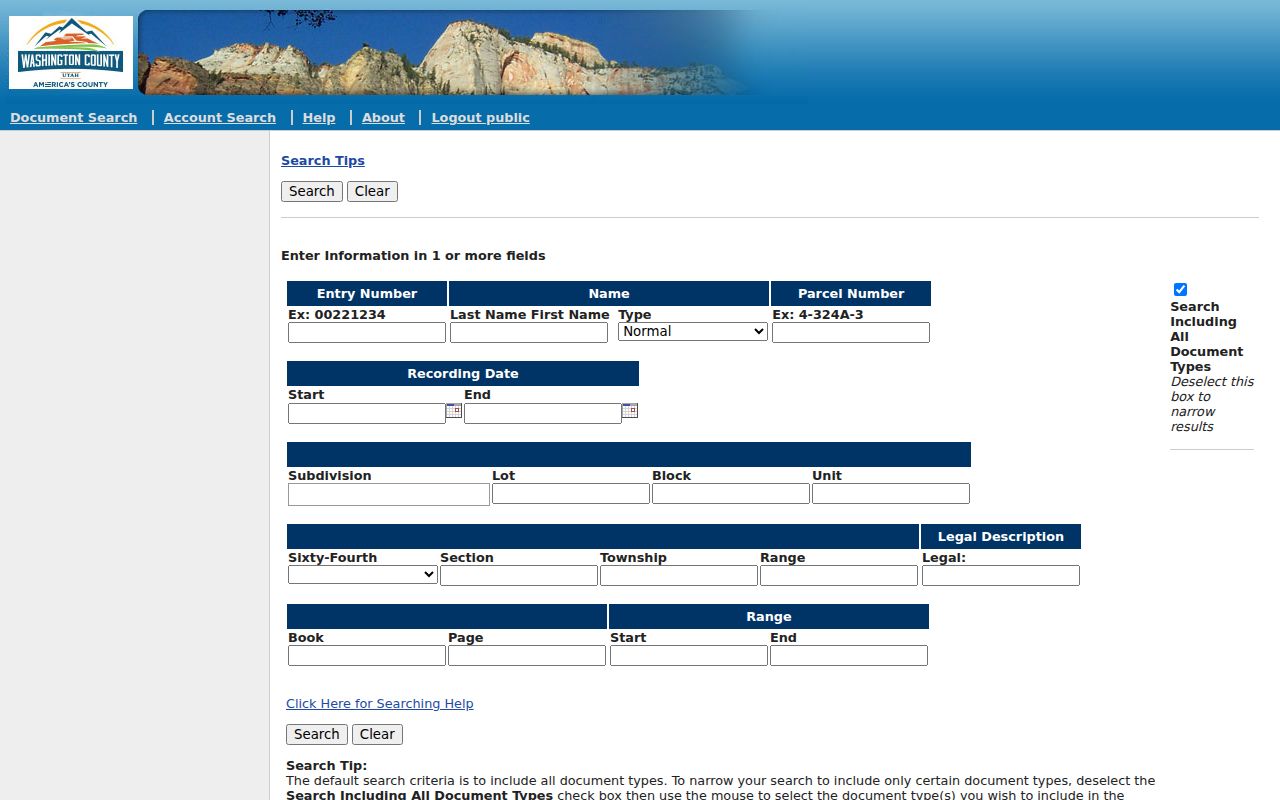
Use the parcel result as a property lead, then check the Recorder for the instrument and legal description behind an ownership claim.
The Utah entity search accepts Entity Name, City, Entity Type, and County. A business association is a role clue, not proof that a person lives at the entity address.
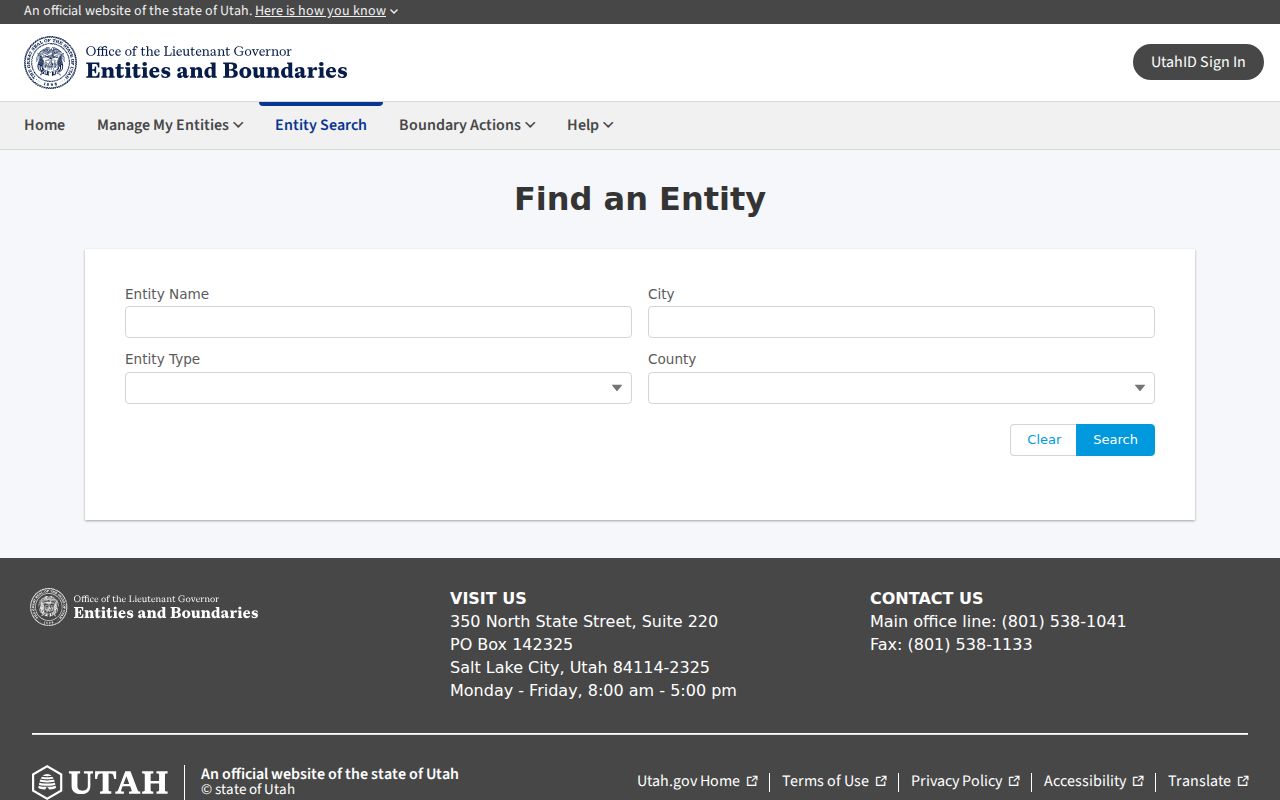
Keeping these two searches distinct prevents a property result and an organization result from being merged into one identity.